
A rear locker can make a stuck truck feel unstoppable, but only when it answers when called. Failing differential lock actuator problems often show up as a blinking dash light, a locker that will not engage, a locker that will not release, odd clicking near the axle, or a truck that feels bound up during turns. The hard part is that these signs can feel like transfer case trouble, bad wiring, worn tires, or internal axle damage. That is why guessing gets expensive fast. For truck owners comparing repair stories, used 4WD listings, or automotive repair news and buyer guidance, the smarter move is to read the symptom pattern before buying parts. A Silverado in mud, a Tacoma on a trail, and an F-150 backing a trailer into a wet field may all complain in different ways. The actuator is only one small piece, yet it controls the moment when traction turns from ordinary to locked. When it fails, your truck may still drive fine on pavement. That false calm is what fools people.
Failing Differential Lock Actuator Symptoms You Notice First
The first signs rarely arrive as one clean failure. More often, the truck gives you a mixed message. The switch lights up, the dash icon flashes, and you hear something from the rear axle, but the tires never act locked. Or the locker engages once on a dirt road, then refuses to release until you roll forward and backward in a parking lot.
That messy behavior matters. A rear diff lock is not like a burned-out bulb where the failure is plain. It sits between electronics, gear oil, axle movement, tire load, and driver input. One weak point can make the whole system look guilty.
Blinking locker light with no real bite
A blinking locker light is the classic warning that the command was sent but the job was not finished. The truck may be waiting for the collar to slide into place, waiting for wheel speed to match, or fighting a weak actuator that cannot move far enough. You press the button, the indicator blinks, and the rear tires still spin like an open differential.
The real test is not the light. It is behavior. On loose gravel, a working rear diff lock should make both rear tires push together. If one tire digs while the other sits quiet, the light is telling only half the story. That is why experienced off-road drivers do not trust the dashboard alone.
A non-obvious clue is timing. If the light flashes longer in cold weather or after water crossings, the issue may be drag inside the actuator, moisture in the connector, or stiff gear oil slowing the lockup. The part may not be dead yet. It may be weak under load.
Clicking, silence, or delayed engagement near the axle
Sound can narrow the hunt. A light click from the rear axle means the circuit may be alive, but the mechanism is not completing travel. A repeated clicking noise can point toward a motor or solenoid trying and failing. Total silence after pressing the switch can push suspicion toward the fuse, relay, switch, wiring, ground, or actuator feed.
Still, silence does not prove the actuator is bad. A cut wire above the axle can create the same quiet. So can corrosion in a connector packed with old trail mud. In snow-belt states like Michigan, New York, Ohio, and Pennsylvania, salt and slush can attack the harness long before the internal gears wear out.
A good shop will listen, then test. That order saves money. Replacing the rear locker actuator without checking power and ground is how a simple wiring repair turns into a parts bill that teaches the wrong lesson.
How the Rear Locker Fails Under Real Truck Use
A rear locker lives a harder life than most owners picture. It gets soaked, heated, cooled, shaken, and asked to work after months of sitting unused. A truck can spend 98 percent of its life in school pickup lines and highway lanes, then need the locker to work at the exact moment a boat ramp turns slick.
That gap between use and need is where problems grow. Motors stick. Seals age. Connectors loosen. Tiny amounts of water work into places that were clean five years ago. The truck still feels healthy until the day traction runs out.
Water, rust, and trail grit change the failure pattern
On a dry Arizona trail truck, dust and heat may be the main enemies. On a Vermont plow truck, corrosion may be worse. On a Texas ranch truck, tall grass, mud, and cattle-lot grime can cake around the axle housing. The same rear diff lock warning can come from three different lives.
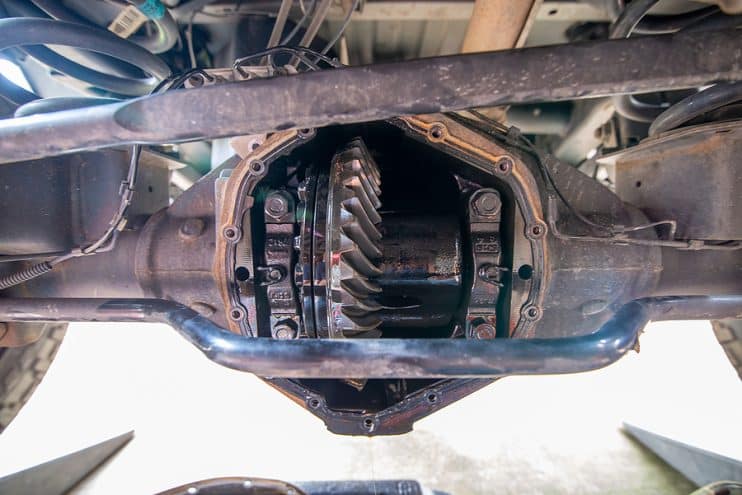
This is why the underside tells the truth. Look at the actuator housing, harness clips, connector seals, breather routing, and axle cover. A shiny dash switch does not mean much if the wiring near the axle has been sandblasted by gravel roads for years.
One counterintuitive point: a clean truck is not always safer. A pressure washer aimed at the rear axle can drive water into connectors. A fresh underbody detail can hide seepage or scraped wiring. If you are buying a used truck with an advertised locker, test it before you admire it.
Tire mismatch can make a good locker look sick
A rear locker hates tire mismatch. If one rear tire is a different size, brand, wear depth, or pressure, the axle may carry extra tension before the locker even engages. Then the actuator gets blamed because the system feels slow, stuck, or harsh.
Picture a contractor’s F-150 with one newer rear tire after a puncture. On pavement, it may drive fine. On a jobsite, the locker may feel stubborn because the rear wheels are not rolling in perfect agreement. The same thing can happen when a spare is mounted on the rear axle.
This is not glamorous diagnosis. It is tape-measure work. Check tire size, pressure, and tread depth before condemning the 4WD actuator or the rear axle. Many owners skip that step because tires feel unrelated. They are not. Tire mismatch can load the drivetrain in ways a small electric actuator was never meant to overcome.
Separating Actuator Trouble From Differential Damage
A bad actuator controls lockup. A damaged differential affects how power, bearings, gears, and axle parts behave all the time. Mixing those two up is expensive. One is often electrical or external. The other may mean opening the axle.
The key is when the symptom appears. Does the truck act strange only when you request the locker? Or does it whine, clunk, vibrate, leak, or bind during normal driving? That timing can keep you from chasing the wrong repair.
When normal driving still feels smooth
If the truck drives quietly in 2WD and 4WD, turns without drama, and has no gear whine, the axle internals may be healthy. In that case, a locker that will not engage points more toward the actuator, switch, wiring, relay, control module, or engagement conditions.
A weekend Tacoma owner may notice this after reaching a rutted hunting trail. The truck drove two hours on the highway with no noise. Then the rear locker light blinked at the trailhead and never went solid. That pattern does not scream ring-and-pinion failure. It says the lock command is not being completed.
A careful owner can start with simple checks. Confirm the truck is in the required drive mode. Roll slowly in a straight line. Check the owner’s manual. Inspect the related fuse. Look at the rear axle connector. Then move to voltage and continuity testing. For broader ownership safety checks, the NHTSA recall lookup is also worth checking before assuming a problem is only wear and tear.
When noise, leaks, and binding point deeper
A locker fault can be quiet. A bad differential often is not. Whining on acceleration, rumbling on coast, metal in the oil, leaking axle seals, or heat from the housing after normal driving can point beyond the actuator. If the truck binds in turns even with the locker off, do not keep driving as if the switch is the only issue.
This is where a shop earns its fee. Pulling codes may help, but gear oil inspection can tell a different story. Burned oil, silver paste, chunks on the magnet, or a dry housing changes the whole repair conversation. A new actuator will not save worn bearings or damaged gears.
The non-obvious insight is that a stuck-on locker can create symptoms that look like internal damage. On dry pavement, both rear tires are forced to rotate together. The truck may hop, scrub tires, and fight turns. That can feel like a broken axle, but the first question should be simple: is the locking differential still engaged when it should not be?
Repair Choices, Costs, and Smart Prevention
The right repair depends on proof. A shop that replaces the actuator because the light blinks may get lucky. A shop that tests the circuit, confirms movement, checks the axle oil, and verifies tire match is working from evidence. For a truck you depend on, evidence beats luck.
Costs can vary widely because the part is only part of the job. Some actuators are easy to reach. Others fight rusted bolts, seized housings, or old connectors. On older trucks, labor can grow because the axle area has lived through years of water, salt, and heat cycles.
Testing before parts keeps the bill sane
Start with the simple items. Confirm the locker is being used in the correct mode and at the right speed. Some trucks will not allow rear locker engagement in every drive setting. Then check for stored codes with a capable scan tool, inspect fuses, test the switch, and verify power and ground at the axle connector.
After that, the mechanic can command the actuator and watch what happens. Does it move? Does it stop short? Does the indicator switch report the wrong position? Does tapping the housing change behavior? Each answer matters.
For owners building a repair plan, four wheel drive maintenance guide and used truck inspection checklist pages can help organize the basics before a shop visit. Bring notes. Tell the technician whether the locker failed hot, cold, wet, loaded, or after tire work. That detail can cut diagnosis time.
Prevention is mostly about using the system correctly
Rear lockers do not like being ignored forever, and they do not like being abused on dry pavement. The best habit is simple: cycle the locker now and then on a loose surface where the tires can slip a little. Do not force it during a tight turn on high-traction ground. Unlock it once you are out of the trouble spot.
Cleaning matters too, but gentle cleaning wins. Rinse mud from the axle area without blasting connectors at close range. Keep the axle breather clear. Fix gear oil leaks early. After deep water, inspect the fluid. Milky oil is not a badge of adventure; it is a warning.
The quiet truth is that many rear locker failures begin as neglect, not hard use. A ranch truck that exercises its locker weekly may have fewer surprises than a polished mall truck that has not locked the rear axle since the day it left the dealer. Mechanical parts often prefer honest work.
Conclusion
A rear locker is a small switch with a large job. When it stops responding, the truck can still look capable while losing the one feature you counted on in mud, snow, sand, or steep loose ground. The best response is not panic, and it is not instant parts swapping. Read the pattern first. Differential lock actuator trouble usually leaves clues in the dash light, axle sound, engagement delay, tire behavior, and the conditions that trigger the fault. One blinking light may be a weak motor. Another may be corrosion. Another may be tire mismatch or a control issue. Treat the symptom like a trail marker, not a final answer. Test the basics, respect the owner’s manual, and avoid using the locker where the tires cannot slip. A four wheel drive truck stays trustworthy when its traction tools are checked before the road turns ugly.
Frequently Asked Questions
How do I know if my rear locker actuator is bad?
A bad rear locker actuator often causes a blinking locker light, no engagement, delayed engagement, clicking near the axle, or a locker that will not release. Confirm the truck is in the correct drive mode first, then test wiring and power before replacing parts.
Can I drive with a rear diff lock problem?
You can often drive if the locker is off and the truck behaves normally. Do not keep driving if the rear axle stays locked on pavement, binds in turns, leaks oil, or makes grinding noises. Those signs can damage tires, gears, or axle parts.
Why does my rear diff lock light keep flashing?
The light usually flashes when the system is trying to engage or confirm lock position. It may need slow straight-line movement, correct 4WD mode, matching tire speed, or a working position sensor. If it never turns solid, testing is needed.
Is a 4WD actuator the same as a rear locker actuator?
No. A 4WD actuator usually engages a front axle, transfer case function, or drive mode component. A rear locker actuator controls the rear locking differential. The symptoms can overlap, so the exact system must be identified before repair.
What causes a locking differential to stay engaged?
A stuck actuator, binding lock collar, damaged position switch, wiring fault, tire mismatch, or drivetrain wind-up can keep the rear locker engaged. Try gentle straight-line movement on a loose surface, but stop if the truck hops or fights turns.
How much does rear locker actuator repair cost?
Cost depends on truck model, part price, rust, access, and diagnosis time. A simple wiring repair may be modest. An actuator replacement can cost more. Internal differential damage costs far more, which is why testing matters before parts are ordered.
Can low differential fluid affect locker operation?
Yes, low or contaminated gear oil can increase heat, wear, and drag inside the axle. It may not be the only cause of a locker issue, but it can make engagement rough and shorten differential life. Check leaks and fluid condition early.
Should I buy a used truck if the rear locker does not work?
Only if the price reflects the risk and you know the likely cause. A blinking light could be simple wiring, but it could also hide actuator or axle damage. Test the locker on a loose surface and get a proper inspection before buying.