

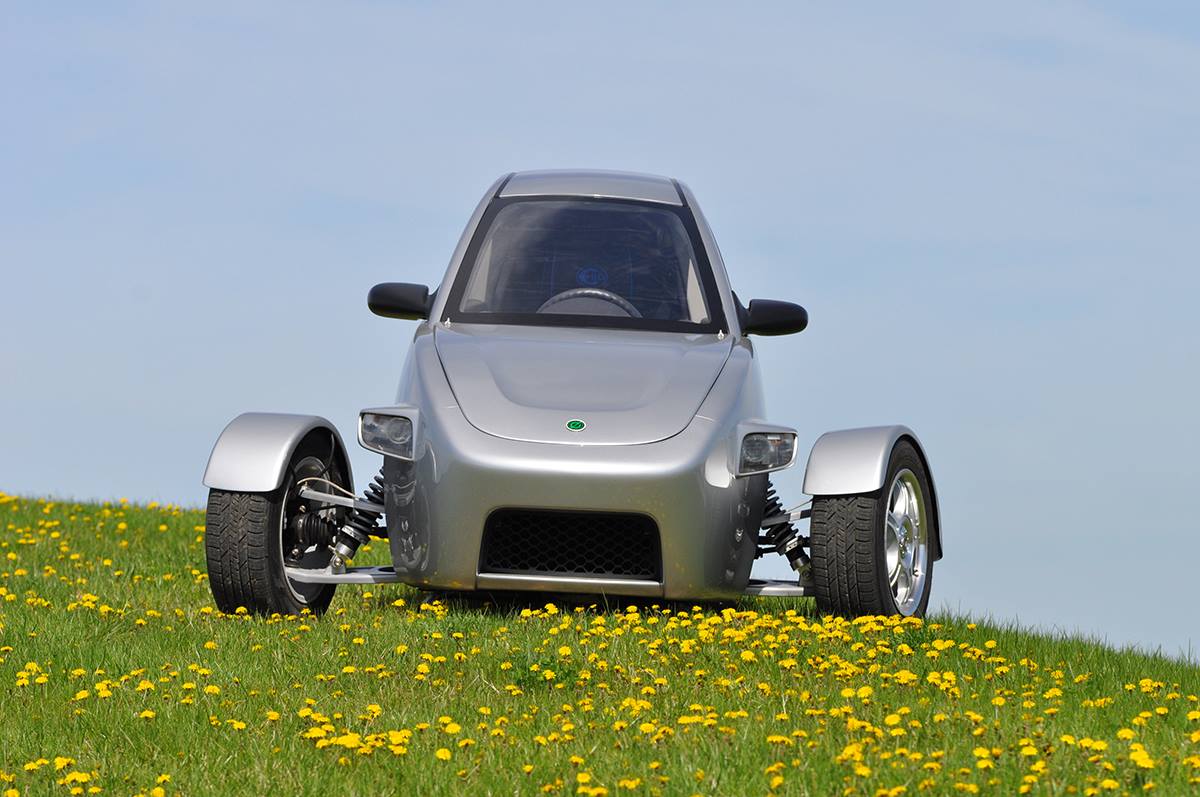
Some car ideas fail because nobody cares. This one failed for the opposite reason: people cared too much, too early, and for too long. Elio Motors became a symbol of the cheap American commuter dream, a narrow three-wheel machine that promised high fuel economy, a low purchase price, and homegrown manufacturing. For readers trying to understand the current status, the plain answer is this: no consumer production car arrived, public filings dried up, and the project now looks inactive rather than delayed. The story still matters because it shows how a strong idea can fall apart when price, funding, regulation, and manufacturing reality refuse to line up. For a broader look at how ambitious ventures get judged in public, automotive market analysis often comes down to the same question: can the promise survive contact with execution?
The Elio looked simple from the outside. Two seats. Three wheels. One narrow body. A price that made worn-out used cars seem expensive. Yet the more you study it, the more it looks less like a simple three wheeler car and more like a full auto startup trying to skip the hard middle steps.
Elio Motors Current Status: The Quiet End of a Loud Promise
The current status is not a comeback story. The company’s official public trail points toward silence, not production. Its SEC company page now says the Exchange Act registration has been revoked, and there are no current public filings showing an active path to building customer cars. Older financial notes also show the same core problem that haunted the project for years: deposits existed, obligations existed, but production still had not begun. Readers can check the official record through the SEC’s EDGAR company search.
That matters because failed car projects often hide behind soft words. “Delayed” sounds gentle. “Paused” sounds planned. This one had years of moving targets, fresh angles, and revived messaging, but no mass-market vehicle reached American buyers. The hard truth is duller than the hype. The machine did not get built at scale.
What “current status” means for reservation holders now
For someone who put down money years ago, the status is painful because it does not feel like closure. A clean failure usually comes with a notice, a refund plan, a court process, or a sale of assets. This project left many people with a foggier ending. Some deposits were described as refundable, while others were sold as nonrefundable reservation commitments. That split made the customer experience messy from the start.
A buyer in Ohio or Arizona who paid $100 could see the risk as a small bet. A buyer who paid more, believed the production date, and followed the tour events felt something different. They were not buying a toy. They were trying to lock in cheap transportation before prices rose.
Here is the counterintuitive part: the small deposits may have made the dream harder to kill. When people risk a little money, they often stay emotionally attached longer than they would with a normal car order. The low entry price kept hope alive. Hope became part of the business model.
Why the EV pivot did not reset the clock
The later electric version sounded like a fresh start, but it was also an admission that time had moved on. The original appeal was an ultra-efficient gas commuter with a headline price low enough to shock people. By the time an electric version was floated, the market had changed. Used hybrids were easier to find, small crossovers had taken over American driveways, and EV startups were already fighting for attention.
The price also shifted upward. That damaged the old magic. A low cost vehicle can survive odd styling because buyers forgive a lot when the payment is tiny. Raise the price, and the same shape faces tougher questions. Where is the dealer network? Who services it? What happens after a crash? Can my spouse fit? Can I sell it later?
The EV move was not foolish on paper. It was late. A late pivot can feel active while still being a sign that the first plan ran out of road.
Why the Affordable Three-Wheel Dream Pulled Buyers In
The original pitch landed because it spoke to a real American frustration. Commuters spend money to move empty seats. A pickup, SUV, or sedan often carries one person to work while burning fuel, wearing tires, and taking up space. The Elio answered that waste with a direct insult to normal car design: what if a daily commuter did not need to be a full car at all?
That idea still has force. A three wheeler car can make sense for the right driver. The mistake was not noticing that Americans wanted cheaper transportation. The mistake was thinking desire could erase the cost of building, certifying, financing, delivering, and supporting a new vehicle.
The $6,800 promise was brilliant marketing and brutal math
The low price made the project famous. It also trapped the company. Once a startup tells people a new vehicle can cost less than many used cars, every later change feels like betrayal. Buyers remember the first number. They build their belief around it. A higher target price may be honest, but it sounds like a broken deal.
A vehicle with air conditioning, power windows, safety features, a unique body, custom parts, and a new production setup is not cheap because the body is narrow. The expensive work sits in tooling, suppliers, testing, labor, logistics, warranty planning, and cash reserves. Those costs do not shrink as neatly as the vehicle’s width.
This is where the dream became dangerous. The low price won attention before the business had proven it could carry that attention. In car manufacturing, fame is not fuel. It can even raise the burn rate.
Why American commuters liked the idea anyway
The appeal was easy to understand if you have ever driven alone on I-10, I-75, or the 405 and watched large vehicles crawl through traffic with one person inside. A small enclosed commuter pod feels sensible in that world. It promises a private cabin without the cost of a full-size car. It also feels more weather-ready than a motorcycle.
That emotional mix helped the project travel well at events. People could sit in the prototype and see a version of their daily life that cost less. They did not need a lecture about efficiency. The shape made the point.
The non-obvious lesson is that the odd design was not the main barrier. Americans buy odd things when the value is clear. The real barrier was trust. Once delivery dates moved again and again, the vehicle stopped being strange in a fun way and started being strange in a risky way.
For readers comparing this story with newer vehicle startups, small car buying trends are worth watching because the problem has not gone away. Americans still want lower running costs. They simply do not want to become unpaid test subjects.
Where the Business Model Started to Crack
A startup can survive one hard problem. This one had several at once. It needed a new vehicle, a new manufacturing plan, a new public-investor story, a reservation pipeline, supplier confidence, regulatory clarity, and enough cash to reach production. Each piece depended on the others. That made the whole plan fragile.
The Shreveport plant gave the project a serious-looking stage. A former GM site sounds like proof that manufacturing is near. In practice, an old factory does not build cars by itself. It needs working capital, right-sized equipment, trained labor, supplier timing, quality systems, and a product ready for repeat production. Without those pieces, a plant can become a prop.
The Shreveport plant made the dream look closer than it was
The Shreveport plant was powerful imagery. It carried the memory of American manufacturing and the pain of lost auto jobs. Promising work there gave the project civic weight. It was no longer only a weird commuter car. It became a jobs story.
That raised the stakes. Local leaders wanted employment. Reservation holders wanted cars. Small investors wanted upside. The company needed all three groups to keep believing. But a jobs promise can sour fast when no assembly line starts moving.
The plant also created a false sense of distance. To the public, a factory lease can look like the final step. In reality, it may be closer to buying a gym membership before getting healthy. It gives you access to the room. It does not do the work.
Deposits, public money, and trust became tangled
Customer reservations helped prove demand. They also created pressure. Every deposit was a tiny vote of confidence, and thousands of those votes became part of the pitch. But deposits are not the same as production financing. A line of hopeful buyers does not pay for a mature supply chain.
That confusion hurt the story. If enough people wanted the vehicle, why was the car not being built? If the design was so efficient, why did the project need so much money? If the price was low, why did the timeline keep stretching?
The answers are not mysterious. Vehicle manufacturing punishes undercapitalized teams. A prototype can charm people at a mall event. A production model has to pass through repeatable assembly, quality checks, supplier contracts, crash considerations, service planning, and warranty exposure. That is where cheap promises meet expensive reality.
A useful comparison is covered in vehicle startup warning signs, because the pattern repeats: early demand gets treated like proof of business health. It is not. Demand only matters if the company can deliver without losing control of cost.
What the Failure Teaches Future Commuter-Car Startups
The project should not be remembered only as a punchline. It was chasing a real problem. The United States has millions of people who need affordable solo transportation, especially outside cities where transit is thin and work sites are spread out. A smaller commuter vehicle still makes sense for nurses, warehouse workers, students, retirees, and anyone who drives alone most days.
The lesson is not “never build small.” The lesson is “do not sell the finish line before you have crossed the hard middle.” A low cost vehicle needs boring proof more than exciting claims. Buyers need to know who builds it, who fixes it, how parts arrive, how insurance treats it, and what happens when the first model year has problems.
Build trust before selling the next deadline
Future startups should stop treating timelines as marketing tools. A production date should be earned through supplier readiness, tooling progress, validation miles, and financing that can survive delays. When a company says production is 18 months away only after funding arrives, the honest headline is not “production soon.” It is “funding not solved.”
That distinction matters to ordinary buyers. A commuter with a failing 2009 Corolla cannot plan around a maybe. They need transportation now, or at least a delivery window backed by hard proof.
A better approach would be smaller and less glamorous. Build fleet pilots first. Put vehicles with city departments, campus security teams, delivery operators, or controlled commuter groups. Publish repair data. Show winter testing in Michigan and summer cabin heat results in Texas. Let the vehicle earn belief through use.
The right product may have been narrower than the promise
The strange truth is that the Elio may have been too broad in ambition while being narrow in shape. It tried to be cheap enough for budget buyers, efficient enough for fuel misers, safe-feeling enough for car drivers, unusual enough for attention, and mainstream enough for mass production. That is a heavy load for one machine.
A smarter path might have started with a smaller market. Not every American. Not every commuter. Maybe security fleets, government campuses, warm-weather delivery routes, or second-vehicle households in Sun Belt suburbs. A focused launch can forgive limits. A national consumer launch cannot.
That is the quiet lesson for the next three wheeler car dream. Odd vehicles need narrow first audiences. Once real users prove the machine, the market can widen. Starting with everyone often means satisfying no one.
Conclusion
The story is not only about a failed car. It is about how American buyers respond when a company gives them a believable answer to a daily pain. High fuel costs, long commutes, and used-car sticker shock made the idea feel practical. Then the gap between promise and production kept growing.
The lesson of Elio Motors is that an appealing concept cannot outrun manufacturing discipline. The design caught attention because it felt lean, cheap, and clever. The business behind it needed far more cash, clearer regulation, stronger delivery proof, and less dependence on hope. By the end, the three-wheel layout was not the biggest problem. The bigger problem was asking buyers, investors, and local communities to keep believing after the facts had stopped improving.
Future startups should study this case without sneering. There is still room for cheaper commuter transportation in the United States. But the next company has to earn trust in metal, miles, service records, and honest financing. Promise less. Prove more.
Frequently Asked Questions
Is the three-wheel project still in production?
No public evidence shows active consumer production. The official SEC company page now shows revoked Exchange Act registration, and the long-promised vehicle never reached mass delivery. At this stage, it is safer to treat the project as inactive rather than waiting for a normal launch.
Did customers ever receive their reserved vehicles?
Mass-market customer deliveries did not happen. The company showed prototypes and gathered reservations, but it did not complete the jump to regular production. That gap is why the project still frustrates many early supporters who believed they were saving a production slot.
Why was the three-wheeler supposed to be so cheap?
The concept used a narrow body, tandem seating, and three wheels to cut weight and improve efficiency. That helped the sales pitch, but it did not remove the large cost of tooling, suppliers, testing, labor, warranty planning, and factory readiness.
Was the vehicle legally a car or a motorcycle?
It sat in the autocycle space, which made it feel car-like to buyers but different from a normal passenger car under some rules. That gray area helped the concept in some ways, yet it also added confusion around licensing, helmets, insurance, and safety expectations.
What happened to the Shreveport factory plan?
The Shreveport site helped the project look serious and tied it to American manufacturing jobs. The problem was that access to a factory did not equal production readiness. Equipment, capital, suppliers, workers, and final validation still had to come together.
Why did the electric version not save the project?
The EV version arrived after years of missed expectations. It also changed the price story that made the original concept famous. By then, buyers had more alternatives, and the company still needed proof that it could fund and build vehicles at scale.
Was the idea itself bad?
No. A small enclosed commuter vehicle can make sense for solo drivers. The weak point was execution, not the basic need. The project tried to move from prototype excitement to mass production without enough proof that cost, funding, and delivery could work together.
What should future auto startups learn from this failure?
Start with a smaller launch, prove the vehicle in real use, and avoid taking broad consumer money before production is close. Buyers can forgive a weird shape. They are less forgiving when deadlines move, prices change, and delivery never becomes real.