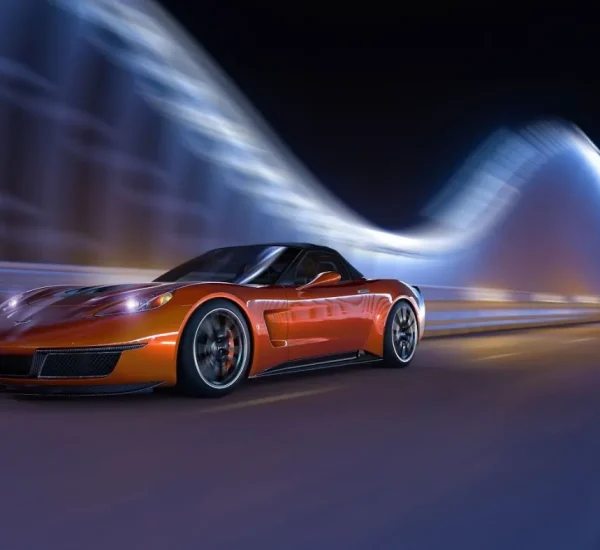


Some cars become famous because they dominate tracks, sell out build slots, or break records in front of witnesses. The Genty Akylone sits in a stranger lane: a French hypercar with wild numbers, a dramatic shape, and a paper trail that asks you to read slowly. For readers who follow rare-car projects through independent automotive visibility, this is the kind of machine that proves hype can be part of the story without being the whole story. The core search intent is plain: you want to know what the car is, what the Akylone specifications claim, how believable the performance claims are, and where the project stands now. The honest answer is not a simple fan chant. It is a mix of ambition, prototype evidence, shifting technical details, and collector caution. That makes the car more interesting, not less. A finished showroom hypercar is easy to judge. A long-running independent project tells you more about how hard this class of car is to build.
Why This French Hypercar Still Pulls American Attention
The United States has no shortage of wild machines, yet American buyers and car-watchers still pay attention when a small European shop tries to build something that can stare down Bugatti, Koenigsegg, Pagani, and Rimac. Part of that interest comes from rarity. Part comes from the old romance of the outsider brand. The Akylone carries both. It does not feel like a boardroom product with ten trim levels planned before the first clay model dries. It feels like one person’s obsession made visible.
The appeal is not only the horsepower
The easy way to explain the car is to say it claimed around 1,200 horsepower and a 220 mph top speed. That gets clicks, but it misses the better story. The appeal comes from the way those numbers clash with the scale of the company behind them. A global brand can bury a weak idea under staff, suppliers, test fleets, and marketing. A tiny maker cannot hide as well. Every design choice feels exposed.
That is why the French hypercar angle matters. France has Bugatti, of course, but modern Bugatti is backed by huge resources and lives in a different world. Genty’s car came from a smaller, more personal lane. It aimed for the emotional end of the hypercar market: carbon structure, dramatic doors, low weight, big boost, and a cabin that looked closer to a collector object than a normal production car.
For an American reader, the best comparison is not another European exotic. It is a startup aircraft, a boutique watch, or a hand-built restomod that promises more than a factory catalog can. You do not judge it only by horsepower. You judge the people, the proof, the paperwork, and the risk. That is why the car still fits conversations in Miami garages, Pebble Beach parking lots, and late-night auction chats even without a normal sales footprint.
Why the mystery became part of the story
Most hypercars lose mystery once customers begin posting delivery videos. The Akylone did the opposite. Years of concept images, revised technical claims, event appearances, and prototype coverage gave the car a stop-start rhythm. That rhythm can frustrate readers who want one clean answer. It also helps explain why searches for the car keep returning. The unresolved parts are the hook.
There is a counterintuitive point here: silence can grow a car’s legend. A normal launch cycle burns hot, then fades. A rare project with gaps in the record keeps pulling people back because each new image, auction listing, or social post feels like a clue. That does not mean every claim should be believed. It means the car belongs to the small group of machines where the story and the metal have to be judged together.
That is also why the Akylone specifications should not be read like a window sticker at a U.S. dealer. They read more like a project brief. Some details appeared in early coverage, other details appeared later, and a public prototype brought fresh questions about what the final production formula was meant to be. A clean answer would be nice. The messy answer is more honest.
Genty Akylone Specifications That Matter Most
The spec sheet is the reason most people arrive, but the changes inside that spec story matter as much as the numbers. Early reports centered on a twin-turbo V8, rear-drive layout, low dry weight, and race-style gearbox. Later reporting described a different engine path for the prototype and a more developed package around carbon construction, wide tires, and extreme power. That gap is not a footnote. It is the lens you need.
The engine story changed more than people think
One version of the car was described with a twin-turbo V8 making about 1,200 hp and heavy torque. Later technical summaries pointed to a compact twin-turbo V8 linked to French engine supplier Pipo Moteurs, while auction-related material around the prototype described a twin-turbo Audi-based V10. That is a large swing. It changes sound, packaging, cooling, service plans, and buyer confidence.
Here is the practical reading: the engine headline is less useful than the validation behind it. A 1,200 hp claim in a lightweight car is not wild by modern hypercar standards. Plenty of cars now live near or above that number. The hard part is making that power repeatable, cool, legal, and serviceable. A dyno hero and a road car are different animals.
For U.S. collectors, this matters even more. If a car uses a rare build spec, the buyer is not only buying speed. They are buying future access to parts, software, calibration knowledge, and mechanics who can touch the thing without guessing. That is where rare European supercars can turn from dream to invoice fast. A Miami owner can fly in a specialist once; doing it every time a sensor complains gets old.
Light weight was the main promise
The strongest thread across the car’s story is not only power. It is the push for a high power-to-weight ratio. The project leaned on carbon fiber, low mass, a stiff central structure, big tires, and a driver-first feel. The claimed figures moved over time, but the intent stayed clear: keep the car lighter than many hypercar rivals while giving it enough thrust to feel brutal.
This is the part that makes the French hypercar credible as an idea. Weight is the enemy that ruins many rich-person speed machines. Add luxury gear, safety systems, hybrid hardware, cooling, active aero, emissions equipment, and sound insulation, and a hypercar can become heavy before anyone notices. A lighter machine can feel faster at 60 mph than a heavier one does at 160 mph.
A concrete example helps. A driver leaving a cars-and-coffee event in Texas or California may never touch 200 mph. But that same driver will notice steering weight, brake feel, cabin heat, clutch behavior, visibility, and how the car reacts over broken pavement. Akylone specifications built around weight would matter there. Not on a poster. On a normal road with ugly asphalt.
The catch is that lightness has to survive the final build. Prototype dreams often meet crash structure, cooling ducts, wiring, interior hardware, and legal equipment. Each item looks small by itself. Together, they change the car. That is why a claimed dry-weight figure should be treated as a starting point until an actual chassis sits on scales.
For more background on how low-volume exotics should be judged, see rare European supercar history and modern hypercar buying guide.
Reading The Performance Claims Without Getting Carried Away
The performance claims are the spark: 0–62 mph in about 2.7 seconds, 0–124 mph in about 7.2 seconds, 0–186 mph in about 14 seconds, and a top speed near 220 mph. Those figures sound sharp even now. The trap is treating them as proven road-test results when they have often appeared as maker claims or media repeats. A claim can be useful, but it is not the same thing as a timed run by an outside test team.
Why 2.7 seconds needs context
A 2.7-second 0–62 mph run can mean several things. It can mean the car has the power, traction, gearing, tires, and launch control to do it. It can also mean a simulation under friendly conditions. Without the tire compound, surface, air temperature, fuel load, driver method, and timing gear, the number is more of a target than a verdict.
That does not make it fake. It makes it incomplete. Modern tires and power delivery make huge acceleration figures possible, but rear-drive cars with huge boost need careful setup. Too little tire and the car spins. Too much boost too early and the driver becomes a passenger. Too soft a launch and the number dies before second gear.
The non-obvious insight is this: the quickest number is not always the most impressive one. A car can fake a great short sprint with sticky tires and violent launch tuning. It is harder to feel polished after five hard pulls, during heat soak, or on a rough road when the boost comes in mid-corner. That is where the engineering shows.
The top-speed number is only part of the test
A 220 mph target sounds cleaner than it is. Top speed is not only about power. It also needs drag control, gearing, tire approval, cooling, aero balance, brake confidence, and enough road or track space. At those speeds, small design choices become loud. A little front-end lift can scare a driver. A cooling issue can end a run early. A tire rating becomes a hard limit, not a suggestion.
This is where the Akylone story sits in an odd place. The design language says speed. The claimed output says speed. The low stance, wide body, and aggressive aero all fit the message. But a serious reader should still ask where the independent high-speed run is, who timed it, and what spec the car used.
American buyers know this dance from the tuner world. A shop can advertise a four-digit horsepower build, but the smartest buyer asks for the dyno sheet, fuel used, boost level, mileage, compression test, and cooling logs. Hypercars deserve the same hard questions. The price is higher, but the habit is the same. A clean folder beats a loud sales pitch. The same habit protects you when a seller quotes a magazine number from years earlier. Ask which chassis made that number, then ask whether the car in front of you shares the same engine, gearbox, tires, aero setup, and software.
There is another point many fans miss. Braking from 180 mph matters as much as reaching it. So does stability when crosswinds hit, or when the driver lifts near the end of a straight. The best performance claims do not live alone. They sit inside a full system that can repeat the act without turning drama into danger.
Current Status, Collector Risk, and U.S. Buyer Reality
The current status is best described with care. The Akylone exists beyond a rendering, and public material has shown a rolling prototype. A prototype tied to the project also appeared in 2024 auction coverage, which gave the car fresh visibility among collectors. What is less clear is the scale of finished customer production, U.S. road legality, and how many complete cars exist in buyer hands. That is the part a serious reader should not gloss over.
The prototype matters more than the production rumor
In the rare-car world, production numbers often travel faster than proof. One article says a limited run is planned. Another says a certain number were made. A social caption uses stronger language. Soon the internet treats the highest number as fact. That is risky. With the Akylone, the safer position is to separate planned production, claimed production, prototypes, and delivered customer cars.
The 2024 auction attention matters because it gave the public a clearer object to discuss. A prototype is not the same thing as a normal production car, but it is more meaningful than an image. It has physical build choices. It has wear, mileage, materials, compromises, and ownership history. It can be inspected.
The counterintuitive point: a prototype may be more collectible than a finished run car, even if it is less usable. Collectors often pay for story, firstness, and oddity. A one-off test car can hold appeal because it marks the struggle. It may not be the easiest car to service, register, insure, or drive. That friction can become part of the value for the right buyer.
What an American buyer should check first
A U.S. buyer should begin with documents, not horsepower. Ask for build records, engine origin, gearbox details, chassis number, title history, customs status, service contacts, and any letter from the maker or seller explaining what the vehicle legally is. Then ask whether it is road legal where it sits and whether that status travels to your state. It often does not.
Import rules matter as well. The NHTSA importing vehicle guidance is the place to start for federal safety questions, including show-or-display pathways. That does not solve emissions, state registration, insurance, or service access. It only tells you the safety side of the gate.
The Akylone is best treated as a collector-grade special until proven otherwise. That means the buyer should price in storage, expert inspection, transport, parts risk, and the chance that public-road use may be limited. A person buying it as art may be thrilled. A person expecting a warranty-backed rival to a dealer-sold hypercar may be disappointed by lunch.
Insurance can be the hidden wall. Some carriers will love the story but hate the lack of market comps, parts pricing, and repair plans. A buyer in Arizona, Florida, or California may own the same car on paper, yet face different state rules and storage demands. Before bidding, the smart move is to call the insurer, importer, and state motor vehicle office in that order.
Conclusion
The Akylone is not a car you can judge with the same habits used for a Corvette Z06, Porsche 911 Turbo S, or even a dealer-backed limited Ferrari. It asks for a different kind of reading. You have to separate vision from verification, spec from test, prototype from production, and rarity from usability. That is where the car becomes more than a horsepower headline.
The Genty Akylone still earns attention because it carries the best and hardest parts of the independent hypercar dream. The shape is dramatic, the numbers are bold, and the French origin gives it a flavor the market does not often get. Yet the smart position is careful interest, not blind belief.
For American readers, the takeaway is simple: admire the ambition, respect the craft, but demand proof before treating every claim as settled fact. Rare cars reward curiosity. They punish lazy buying. If you ever get close to one, study the documents before you listen to the exhaust.
Frequently Asked Questions
Is the Akylone a real car or only a concept?
It is more than a digital concept. Public coverage has shown a rolling prototype tied to the project, and a prototype drew auction attention in 2024. The open question is not whether the idea reached metal. It is how many finished, usable customer cars exist.
What engine does the French hypercar use?
That depends on which stage you mean. Early and later project materials discussed high-output twin-turbo V8 plans, while prototype auction material pointed to a twin-turbo Audi-based V10. That split is why buyers should verify the exact car, not rely on one general spec sheet.
How fast is the Akylone claimed to be?
The best-known performance claims include about 2.7 seconds from 0–62 mph and a top speed near 220 mph. Treat those as claimed targets unless tied to the exact car, timing method, test surface, and independent verification.
Why are the Akylone specifications hard to confirm?
Low-volume hypercar projects often change parts, suppliers, engines, and build goals during development. Early articles may describe planned specs, while later prototype coverage may describe a different test car. The safest answer comes from current documents for the exact chassis.
Can someone import this car into the United States?
Possibly, but it would need careful legal review. A U.S. buyer should check federal safety rules, emissions rules, customs documents, state registration limits, and whether any show-or-display path applies. Do not assume foreign ownership papers equal U.S. road legality.
Is it a good collector car?
It could be attractive to a collector who values rarity, design, and story over daily usability. It is a poor fit for someone who wants dealer service, clean parts access, and predictable registration. The risk is part of the object.
How does it compare with Bugatti or Koenigsegg?
On claimed numbers, it aimed for the same emotional space as elite hypercars. In proof, support, production depth, and brand record, it sits in another category. That does not make it less interesting. It makes it more speculative.
What should a buyer inspect before bidding?
Start with chassis identity, title history, engine type, gearbox type, service records, software access, import status, and any factory correspondence. Then hire an expert who understands prototypes. A normal exotic-car inspection may miss the issues that matter most.